Observe the scratch before shopping
A cat scratcher is useful only if it supports the way your cat wants to scratch. Some cats stretch upward against a firm surface. Others lean forward over a horizontal pad or choose an angled edge. Before replacing a piece of furniture or buying another tall post, watch the direction, height, and surface your cat already uses. Those details can guide a more practical choice.
Scratching is a normal feline behavior, so the aim is to provide suitable outlets rather than suppress it altogether. Do not punish the cat or use frightening devices to keep them away from a surface. Protect vulnerable furniture with appropriate management while offering alternatives. A scratcher may also need a different position or a more stable base before it becomes appealing. Start with the cat's observable preference instead of assuming that the most expensive model will solve the problem.
Compare materials through actual use
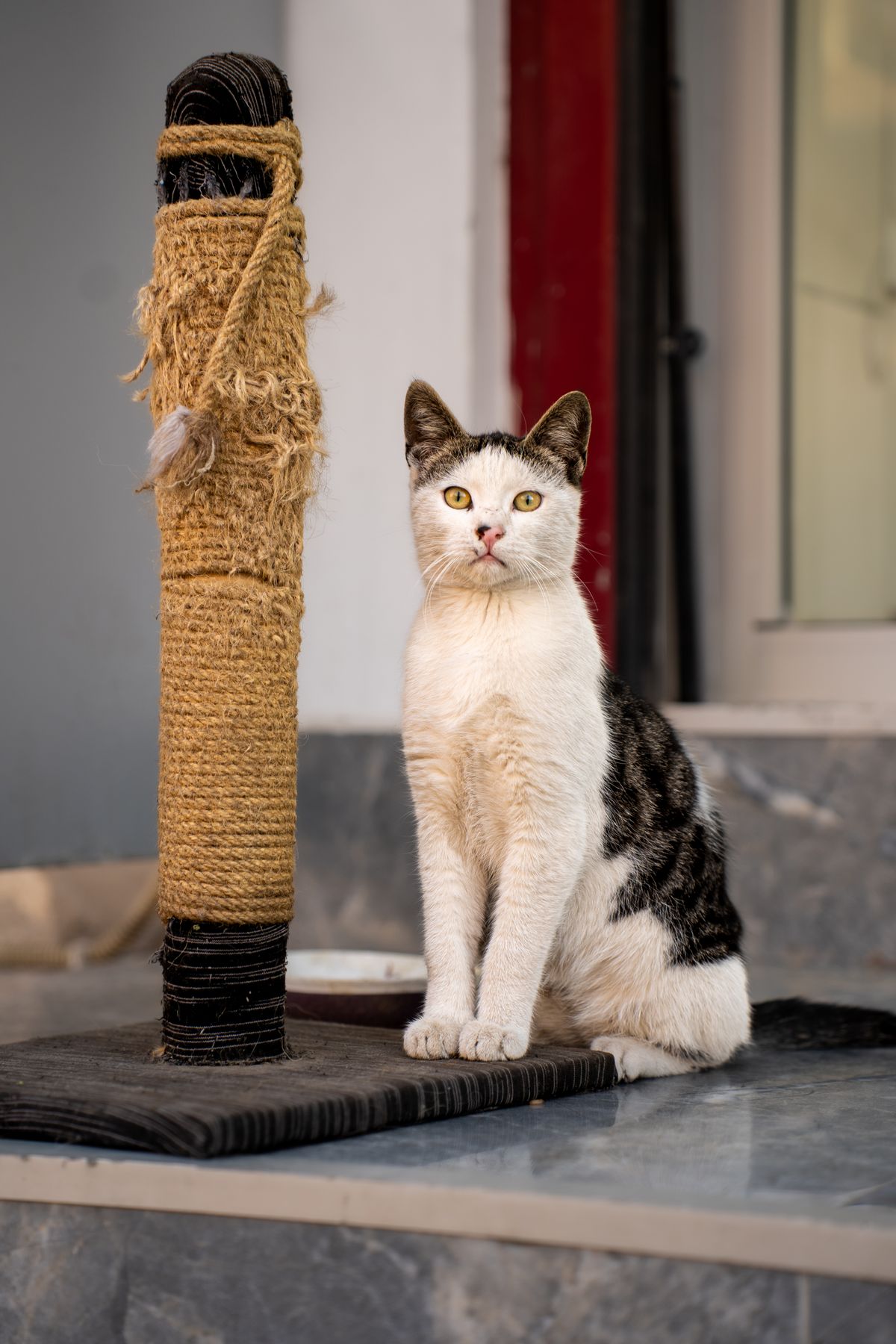
Common scratching surfaces include sisal, cardboard, carpet, and wood designed for that purpose. Cats may have individual preferences, and the texture can change as a product wears. Check how firmly the material is attached and whether it produces loose pieces that could become a hazard. Avoid exposed staples, sharp edges, splinters, or long loops that may catch a claw. Read the manufacturer's maintenance guidance.
If you are unsure what your cat likes, try a small number of clearly different, safe options rather than several nearly identical posts. Keep the rest of the setup reasonably similar so you can observe the difference. A cat choosing cardboard in one location and sisal in another may be responding to both texture and position. There is no need to force a single explanation. The most useful product is one the cat chooses and that the household can maintain safely.
Match the shape to the movement
An upright scratcher should allow the cat to extend comfortably without tipping the structure. A horizontal pad should stay in place under pressure rather than skidding across the floor. An angled scratcher needs a secure base and a surface that remains accessible as the cat grows or ages. Check dimensions against the cat's actual body and preferred movement, not just the product photograph.
Avoid choosing a very small post because it fits neatly behind a chair if the cat cannot use it comfortably there. Equally, a large climbing structure may be unnecessary when a sturdy horizontal scratcher meets the preference. Cats with mobility difficulties may need easier access and veterinary guidance. Do not assume a cat who has stopped using a tall post has lost interest in scratching; the movement or route may have become uncomfortable. Provide suitable alternatives while investigating a significant change.
Give stability its own inspection
Place the scratcher on the intended floor and check whether it rocks or slides. Assemble it exactly as instructed and tighten fittings according to the manufacturer's guidance. A tall product with a narrow or lightweight base may behave differently when a cat pulls against it. Follow any anchoring requirements and obtain suitable help if attachment to a wall is needed. Do not improvise an unstable stack of household items.
Check the landing area around a combined scratching and climbing product. Keep breakables, cords, and trapping gaps away from it. A cat may avoid a scratcher after it has moved or fallen once, even if you stand it back up. Restore a safe setup and allow the cat to approach voluntarily. Do not lift the cat onto the structure or move their paws along the surface. That does not teach a comfortable scratching choice and may create further avoidance.
Choose a location with a reason
Scratching often occurs along normal routes and near resting areas. A product hidden in a distant spare room may be convenient for people but irrelevant to the cat's daily movements. Put an option near a place the cat already uses, with enough room to approach and stretch. If you are protecting a particular furniture edge, an appropriate nearby alternative may be more useful than one across the home.
Consider the household's movement too. A scratcher beside a slamming door or in a busy corridor may be disturbed frequently. Keep the cat's access clear. In a multi-cat home, provide more than one suitable scratching location so a single cat cannot block every option. Watch whether another animal sits on the route. Location is not a one-time decision; a small move may change whether the cat can use the product comfortably without competing for the space.
Introduce without pressure
Let the scratcher become part of the room and allow investigation. You can begin a gentle play session nearby if your cat enjoys that, but avoid dragging claws over the surface or trapping the cat beside it. Reward voluntary interest in a way that suits your cat, such as a quiet interaction or an appropriate small food reward. Do not expect immediate use while people stand around watching.
Some products use catnip or other attractants, but not every cat responds and an attractant does not fix poor stability or an unsuitable shape. Use only appropriate products as directed, and keep the cat's individual health and household needs in mind. If the cat ignores the scratcher, revisit material, movement, and location before adding more stimulation. A calm observation over several days can reveal more than repeatedly presenting the object as if the cat has not noticed it.
Know when wear is useful and when it is unsafe
A used scratching surface will look used. Cosmetic wear can be part of normal use, and replacing every marked surface immediately may remove a familiar resource unnecessarily. At the same time, loosened coverings, broken bases, protruding fittings, and pieces that may be swallowed need attention. Inspect regularly and follow the manufacturer's replacement advice. Keep the structure stable as materials change.
If a surface needs replacement, consider preserving another familiar option while the new one is introduced. Do not remove every well-used scratcher at once simply to make the room look fresh. Wash or clean only as appropriate for the material and allow it to dry fully. Strong scents may change how the object is received. A maintenance routine should protect safety while respecting the fact that the scratcher is a working part of the cat's environment, not an ornament expected to remain pristine.
Try a controlled comparison
Suppose your cat uses the sofa corner but ignores a small post behind it. First check the post's stability and whether it allows the same comfortable stretch. Offer a suitable, secure alternative near the chosen area while protecting the furniture appropriately. Observe which surface the cat uses without moving every other resource in the room.
If you later compare textures, keep the alternatives similarly accessible. A favored cardboard pad beside the window and an ignored sisal post in a cupboard do not provide a fair texture comparison. The cat may be choosing location. Taking one practical variable at a time can save money and help you understand what the product must offer to remain useful in your home.
Buy for the cat you observe
After a week or two, review what the cat actually chose. Did the upright post get used after waking? Was the angled pad ignored until it moved beside the chair? Keep a brief note if you are comparing options. You may discover that one stable, well-placed scratcher is more useful than several decorative models. Avoid buying duplicates before you understand what makes the current option work.
Continue to offer choice as the cat's body and household change. A new pet, a moved sofa, or reduced mobility can alter access. If scratching changes suddenly alongside other behavior or health concerns, speak with the veterinary team. The practical aim is straightforward: suitable textures, comfortable movements, secure construction, and locations that fit the cat's day. When those pieces line up, scratching becomes easier to accommodate as an ordinary part of sharing a home with a cat.