Learn the ordinary pattern
Most pet caregivers notice dramatic changes quickly. Smaller differences are easier to miss: a dog takes another route across the room, a cat waits before jumping to a chair, or an animal rests in a less familiar place. Knowing the ordinary pattern makes those details easier to describe. It does not require a constant surveillance routine. A few calm observations during normal care can help you recognize when something is different.
Choose everyday moments such as getting up from a resting place, approaching a meal, moving through a doorway, and settling after an outing. Observe without asking the animal to perform. Your role is to notice and communicate, not diagnose. A significant, sudden, persistent, or concerning change should be discussed with a veterinary professional. Severe or urgent signs need prompt care rather than a week of note taking to see whether a pattern develops.
Watch movement without making a test
Notice how the pet stands up, turns, crosses different surfaces, and chooses a resting place. Do not repeatedly call the animal onto furniture, make them use stairs, or ask for unusual movements to check what they can do. The fact that a pet can complete an action once does not establish that it is comfortable. Ordinary voluntary movement gives useful information without creating extra demands.
Look at the environment as well. A rug may have moved, a floor may be wet, or furniture may block the familiar route. Correct obvious household hazards safely while keeping the observation separate from your explanation. If the pet continues to move differently, avoids normal activities, or seems uncomfortable, seek veterinary advice. Do not assume age alone explains a change. Older animals still deserve an assessment of new difficulties, and younger animals can also experience problems that are not visible from the outside.
Notice where rest happens
A pet's choice of sleeping place can change with sunlight, temperature, noise, and household activity. Observe whether the animal can reach a comfortable spot, change position easily, and rest without repeated interruption. Provide appropriate options rather than expecting one bed to suit every hour. Keep resting spaces away from busy doorways where possible, and teach children to leave a sleeping animal undisturbed.
Record a change in context. “Moved from the sunny window to the cooler floor on a warm afternoon” is different from “has stopped using every raised bed this week.” Neither description makes a diagnosis, but the detail helps a professional understand what you saw. If rest is repeatedly disrupted by another pet, review access and resources. If the animal seems unable to settle, unusually withdrawn, or different from its normal pattern, ask the veterinary team for guidance rather than simply buying a new bed.
Keep meals and water observations factual
During normal care, notice whether the pet reaches food and water comfortably and whether another animal interferes. Record marked changes in intake, chewing, swallowing, or behavior around the bowl. Do not rely on an empty container if several pets can access it. Separate feeding arrangements may make intake easier to observe, but they do not replace assessment when the animal's behavior has changed.
Keep the current feeding plan unless the veterinary team advises otherwise. Avoid using human foods, supplements, or household treatments to test an explanation. If you need to describe intake, write the actual product, amount offered, and amount left as accurately as practical. Changes in thirst or eating can have many causes, and their significance depends on the animal. Contact the clinic promptly when concerned, especially if the pet is also unwell. Observation is useful because it supports care, not because it removes the need for it.
Include social choices without labeling motives
A pet may seek contact at certain times and prefer distance at others. Notice whether the animal approaches voluntarily, moves away from touch, or avoids a person or situation that was previously comfortable. Do not assume the reason is jealousy, guilt, dominance, or dislike. Those labels can obscure a practical detail such as a noisy room, an awkward approach, or possible discomfort during handling.
Give the animal room to disengage. Avoid holding them in place for a greeting or waking them to check whether they still want attention. If a pet suddenly becomes less tolerant of normal interaction, treat the change as information worth discussing with a veterinary professional. Use safe management while seeking help, particularly if warning signals or aggressive behavior appear. Do not punish growling, hissing, or attempts to move away. A comfortable relationship includes the ability to stop an interaction before it becomes overwhelming.
Use a short note when something changes
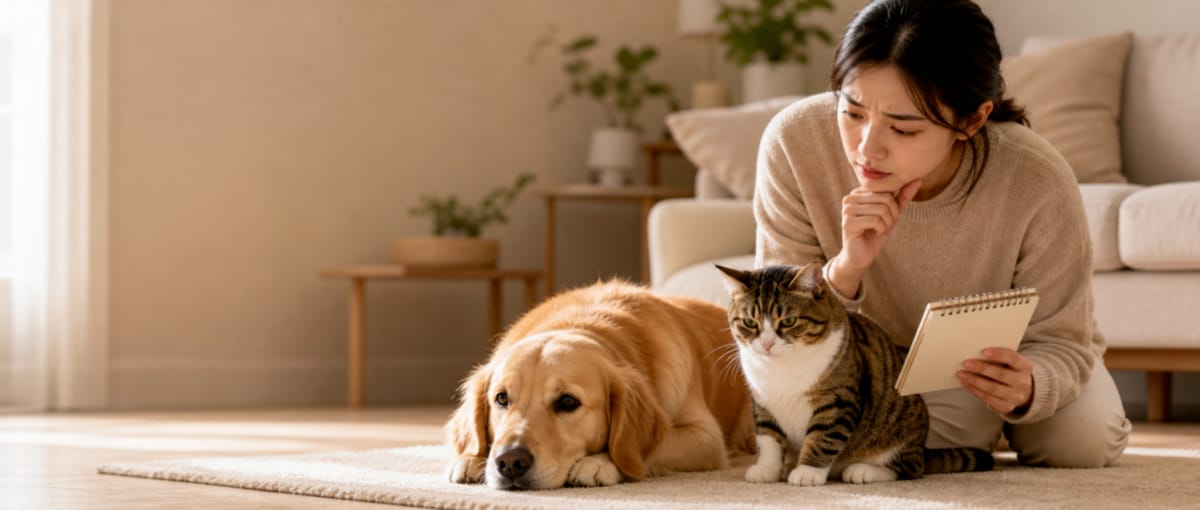
When you notice a difference, record the date, the action, and the circumstances. Include what happened immediately before and after. A brief description such as “hesitated at the kitchen tile after the floor was cleaned” provides a starting point. Note whether the behavior also occurs elsewhere, but do not repeatedly provoke it. If a safe, naturally occurring video would help the veterinary team, ask how they prefer to receive it.
Keep your notes concise and distinguish what you saw from what you suspect. It is fine to write “not sure” when you cannot tell whether a meal was finished or which cat used a resource. Other caregivers may have useful observations, so compare factual notes rather than competing explanations. Store any shared records securely. The purpose is a clearer account for the care team, not a public collection of symptoms for strangers to diagnose.
Change the environment carefully
Simple improvements may make daily life easier: secure a slipping mat, clear a route, provide a lower resting option, or place an additional water bowl in an accessible quiet location. Make changes that are safe and appropriate while seeking veterinary advice about health concerns. Avoid major exercise changes, restrictive equipment, or physical manipulation without suitable guidance. Comfort planning should not become untrained treatment.
If you change several things at once, it can be difficult to tell what affected the pet's choices. For ordinary non-urgent household adjustments, change one practical detail and observe. Keep familiar options available where possible. A cat who ignores a new bed may prefer the old one, and that is useful information. The goal is not to make the room look ideal. It is to give the animal accessible, comfortable choices that fit its current body and the way the household actually functions.
Compare like with like
When describing a pattern, compare similar moments where possible. A dog getting up after a long sleep may move differently from the same dog approaching a favorite toy, and a cat crossing a warm carpet may choose a different pace on cold tile. Record the setting rather than trying to make the animal repeat every action under identical conditions.
This keeps the note fair and practical. Instead of writing that the pet was normal yesterday and abnormal today, explain which activity you saw on each day. Such context does not establish the cause, but it helps the professional understand the limits of your observation and decide what further information or assessment would be useful.
Keep observation proportionate
Once you know the normal pattern, you do not need to score every meal or movement. Continue ordinary care and pay attention to meaningful changes. Follow any monitoring instructions from the veterinary team, and contact them as directed when concerns arise. Do not wait for a scheduled review if the situation becomes urgent. Equally, allow the pet to have a quiet afternoon without treating every change of sleeping spot as a problem.
Useful observation is calm, specific, and connected to action. You notice a difference, describe it accurately, and seek the right help when needed. Over time, that habit can make conversations with caregivers and professionals clearer. It also encourages a more thoughtful home environment: routes stay open, rest is protected, and the animal has choices. Those ordinary details support comfort without asking the caregiver to become a diagnostician or the pet to perform a daily examination.