Choose one small behavior
A hand target is a simple invitation for a dog to move their nose toward an offered hand. It can become a useful way to guide a small change of position without pulling a collar or pushing the dog's body. The skill begins quietly at home, with an easy movement and a clear reward. It is not a way to force a worried dog toward something they want to avoid.
Start in a calm, safe space where your dog is comfortable. Have a few suitable small rewards ready and keep them out of the hand you will present. Choose a moment when the dog is awake, relaxed, and free to leave. If your dog is uneasy around hands, has a history of snapping during handling, or seems uncomfortable moving the head, seek individual professional advice first. The exercise should be easy enough that the dog does not need persuasion.
Make the first offer easy
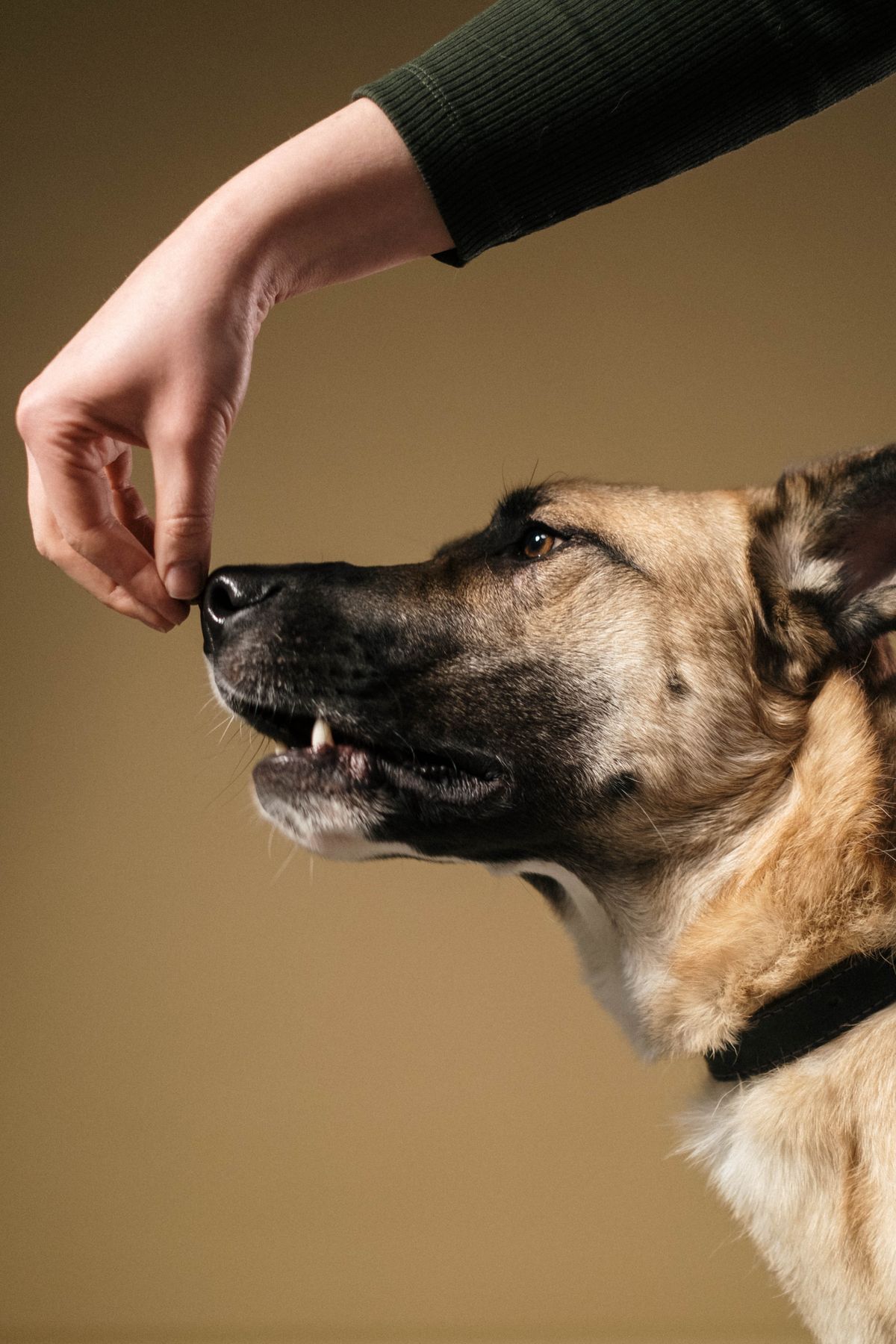
Present your empty hand a short, comfortable distance from the dog's nose, slightly to the side rather than reaching over the head. Keep your posture relaxed. Many dogs will investigate a nearby hand. When the dog moves toward it and makes a light nose contact, use a brief, consistent marker such as “yes,” then deliver a reward with the other hand. If your dog already understands a marker, use that familiar one.
Keep the hand still for the offer. Do not chase the dog's nose, push into the face, or close fingers around the muzzle. If nothing happens, remove your hand, pause, and try an easier position. A dog turning away is not a reason to repeat the cue louder. It may mean the distance, posture, reward, or timing needs changing. End after a few easy successes rather than waiting until the dog becomes bored or frustrated.
Separate the target from the reward hand
Using an empty target hand helps make the behavior clear. If the food is always held against the nose, the dog may simply follow the smell rather than recognize the hand as a target. After the nose contact, move the reward hand into place. Keep the sequence consistent: offer, contact, marker, reward. Avoid waving both hands at once, because that adds unnecessary information.
Reward placement can help the dog reset. Give the reward where the dog can eat comfortably, then allow a small pause before the next offer. Do not throw food across slippery floors or into clutter. If your dog becomes focused on the food container, make the setup simpler and use fewer repetitions. Account for training food in the dog's daily plan. Pets with special dietary needs should use rewards approved for their individual situation.
Add a word after the movement is familiar
Once your dog is readily moving toward the offered hand in this easy setting, you can introduce a short cue such as “touch.” Say it once as you present the target, then mark and reward the nose contact. Use the same word and hand shape consistently at first. The word should predict a behavior the dog already finds understandable, rather than announce a test they have not learned.
Avoid repeating “touch” several times while moving the hand around. If the dog does not respond, remove the target and make the next attempt easier. You can practice again later. Keep sessions short enough that you remain attentive to your own timing. A handful of clear repetitions is more useful than a long series in which the marker comes late and the target keeps changing. Other caregivers can watch one session so everyone offers the same straightforward picture.
Change distance in small steps
Move the hand only a little farther away once the close target is comfortable. Ask for one small step, then return to an easier offer. Keep the hand at a height that allows a natural head and neck position. Avoid drawing the dog into tight turns, jumps, or repeated stretching. Adapt the skill to the dog's body and ask the veterinary team about any movement limitations.
If the dog reaches partway and stops, the increase may have been too large. Reduce the distance instead of leaning farther away. Practice in different parts of the same quiet room before adding a busy environment. New locations change the task even when the hand looks identical. A dog who targets readily beside the sofa may need a much easier version near the front door. Treat that as useful information about the setting, not a failure to listen.
Use the skill for modest household tasks
A hand target can help invite the dog a step away from a cupboard before it opens, toward a clearer patch of floor, or into a comfortable position beside you. Begin with low-pressure situations. Keep rewarding the behavior and allow the dog to choose. Do not use the target to lure the dog into being restrained, to bring them close to a frightening visitor, or to draw them into contact they would otherwise avoid.
Plan the destination before presenting the hand. If you target a dog into a narrow corner and then realize there is no room to turn, the skill has not made the situation easier. Give the dog an open route and avoid using it repeatedly as a substitute for arranging the room well. The target is one communication tool. Gates, clear pathways, and predictable routines still do much of the useful work in a shared home.
Practice outside with safety already in place
When trying the skill outdoors, use a secure lead and appropriate equipment. Choose a quiet place and start with the easy close target again. Do not depend on a newly learned behavior to keep a dog away from traffic or to recall them from another animal. The physical safety arrangement must work before the training begins. Keep sessions brief and stop if the surroundings become too difficult.
Observe whether the dog can eat, look around, and return attention comfortably. A dog who stares fixedly, repeatedly scans, or tries to leave may need more distance or a different location. You can simply continue a calm walk or return home. Avoid reaching the target hand into the dog's face while they are focused on something worrying. Training is most useful when the dog has enough comfort and space to participate without being pulled between competing demands.
An example of a useful reset
Imagine the dog is standing beside a cupboard you need to open. Rather than reaching down to move the collar, check that there is a clear, comfortable space one step away. Offer the familiar target there, reward the response, and open the cupboard only when the dog is safely positioned. Keep the movement modest and easy.
If the dog ignores the target, pause and use another safe management approach instead of repeating the word while opening the door into them. Later, practice the easy version away from the cupboard. This preserves the cue's clarity and reminds you that the skill should support a well-arranged situation, not rescue a rushed plan at the dog's expense.
Maintain a useful, low-pressure habit
Keep a few easy targets in the routine rather than practicing only when you urgently need the dog to move. Reward generously enough that the skill remains worthwhile. Vary the setting gradually and keep the hand position comfortable. If the dog begins hesitating around the cue, consider what has followed it recently. Being repeatedly led toward an unwanted event can change how a familiar invitation feels.
Return to simpler, pleasant practice if needed, and seek qualified help for handling or fear concerns. Do not turn the target into a way of overriding warning signals. Its practical value comes from clear communication and voluntary movement. When it works well, it is almost unremarkable: a hand appears, the dog understands a small request, a reward follows, and both of you continue with the day without a tug on the collar or a confusing series of instructions.