Brushing a cat's teeth is a real headache, and people don't readily offer dental treats, powders, or mouthwash to compensate. With so many options available, choosing the right product can be overwhelming. Do these things actually work? Let's discuss that today.
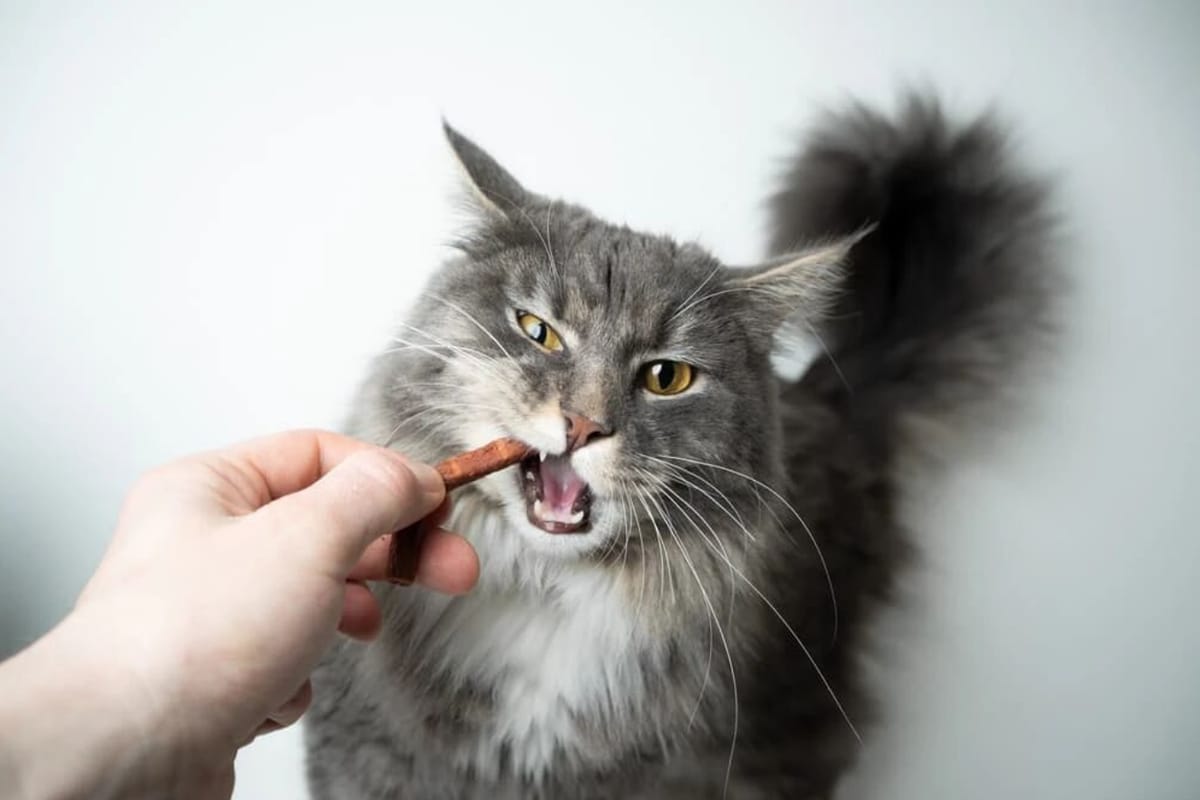
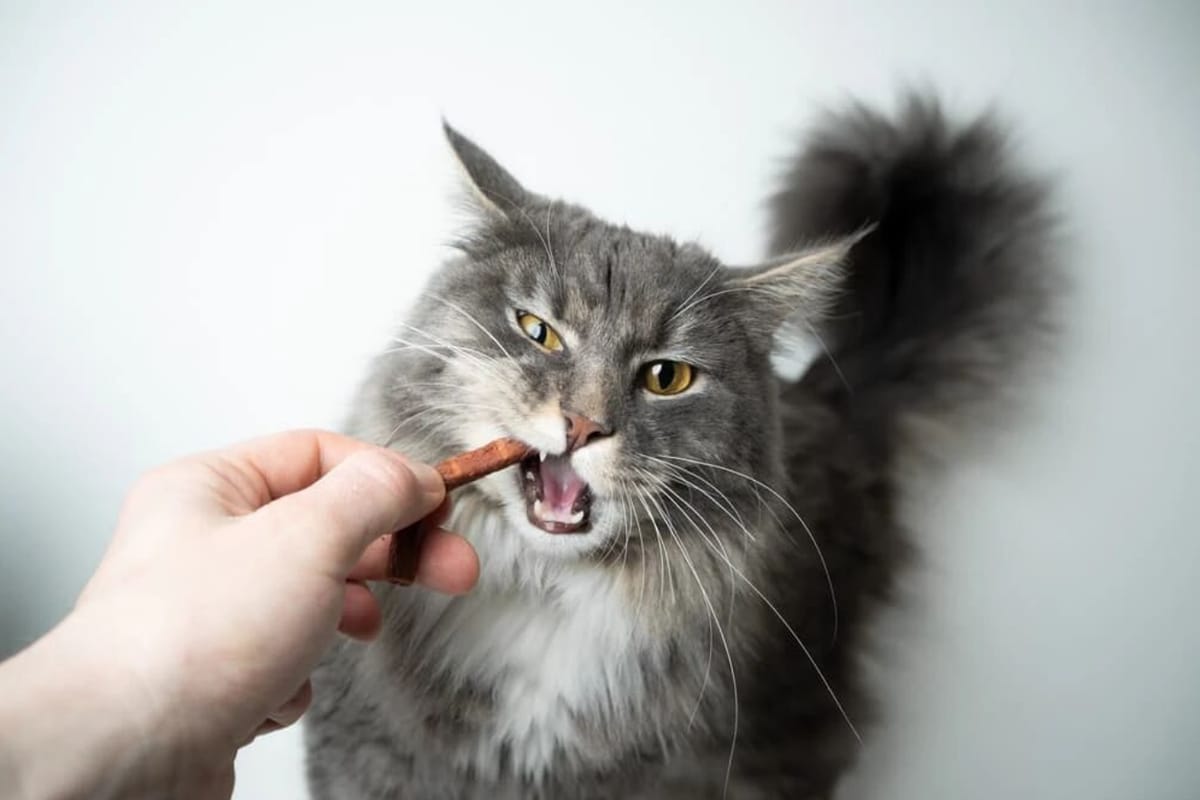
Dental treats like dental sticks, chewable tablets, and dental biscuits work on the same principle as the dry food we discussed yesterday—primarily through mechanical friction. Therefore, these products are generally quite tough to prolong chewing time.
I've observed my cat chewing dental sticks seven or eight times longer than the same volume of kibble. And he only uses his back premolars and molars, areas difficult to reach with brushing. However, some products are designed to be excessively hard to encourage longer chewing. While this increases the cleaning effect, it also increases the risk of tooth breakage. Breaking teeth for the sake of cleaning doesn't seem like a worthwhile investment. So, how hard is hard enough?
If a fingernail cannot leave a dent on the product surface, it is too hard.
Dental powder/freeze-dried dental products/mouthwashes don't require chewing; they're sprinkled into cat food or fed directly to the cat. They primarily work through biochemical regulation, providing a boost to the cat's oral health.
For example, they may contain algae, which enters saliva through blood circulation to inhibit the growth of oral bacteria. They also contain various active enzymes, probiotics, and plant extracts, including those listed in the table above, all mainly aimed at inhibiting oral bacteria and reducing plaque and bad breath.
Antibacterial/anti-plaque solutions are more medical-grade and suitable for adjunctive treatment after periodontal inflammation. They work quickly but are not suitable for long-term use. It's best to follow veterinary instructions. These are not for ingestion; they are applied directly to the teeth and gums. Cats won't cooperate, of course. But don't worry, applying something is better than nothing, even a small amount.
According to Veterinary Periodontology, chlorhexidine is the first-line antibacterial solution. It has high safety, does not induce drug resistance, works quickly, and its antibacterial effect lasts up to 7 hours. Some studies have found that long-term use of chlorhexidine can cause tooth discoloration, but this is reversible and can be removed by polishing.
The second option is zinc salt preparations/gels, the biggest advantage of which is that they are tasteless and easily accepted by cats.
How to choose? Honestly, there are hundreds, if not thousands, of dental cleaning products on the market, making it impossible to give a definitive answer as to which product is best.
After researching various options, I think following these points will likely be a safe bet:
First, clarify your cat's needs: teeth cleaning, bad breath removal, or periodontal disease care, and then choose the corresponding category accordingly; adapt to your cat's physical condition; for example, don't choose hard dental sticks for senior cats, but use dental powder instead; VOHC certification is the first choice. However, the selection is limited; including cat food, there are only 18 certified dental cleaning products for cats worldwide; species-specific formulas are important, as cats and dogs have different requirements for the concentration of active ingredients, so it's best to choose cat-specific products; dental sticks/biscuits are too hard—if your nails can't leave a dent, don't give them to your cat.
In addition, I would like to add one more point: apart from following the doctor's prescription for antibacterial solvents, the most important thing for other products is to use them correctly and use them every day according to the product instructions! The difference between consistent and inconsistent use is greater than the difference between using different products.