Set a modest goal for a wet day
A wet afternoon can make a familiar home feel surprisingly small. The dog has brought a toy to your desk three times, the outdoor path is slippery, and the usual long walk looks unlikely. The answer does not have to be an elaborate indoor obstacle course. A useful plan gives the dog several short opportunities to explore, play, and rest while keeping the room safe for ordinary life.
Indoor activities do not remove the need for appropriate outdoor toilet breaks, movement, or individual care. They are a way to add variety when conditions limit your options. Consider your dog's age, mobility, confidence, and usual play style before beginning. If your dog has a condition that affects exercise, ask the veterinary team which activities are suitable. For a healthy adult dog, start with something easy and stop while the dog is still comfortable rather than trying to exhaust them.
Prepare one safe patch of floor
Clear a modest area instead of moving every chair in the house. Remove trailing cables, children's small toys, food wrappers, and anything that could break. Check for slippery flooring. A stable, flat, nonslip surface is more useful than cushions stacked into a jumping course. Keep running and sharp turns out of the plan if the space is narrow. Household stairs should not become a repeated ball-chasing route.
Choose toys that are suitable for your dog's size and chewing habits, then inspect seams, loose pieces, and damaged material. Supervise play and remove anything that begins to break. Put a water bowl nearby where it will not be knocked into the activity space. If there are several pets, work with one at a time unless you already know they are comfortable playing together. Food and toys can create competition even between animals who usually rest together peacefully.
Begin with an easy search
A simple search can turn a small room into a different experience without much speed. With your dog safely elsewhere, place a few suitable pieces of the dog's usual food in visible, reachable locations on a clean surface. Start with the pieces in the open. Bring the dog in and let them investigate without repeated pointing, chatter, or lifting objects for them. Keep the difficulty low enough that finding something is likely.
Avoid hiding food in electrical equipment, under furniture where paws may become trapped, or inside objects the dog may swallow or shred. Towels and cardboard are not appropriate for every dog; use them only with careful supervision when you know the dog will not ingest them. Count search food as part of the daily ration. If the dog leaves the game, let it end. Searching should be an invitation to explore, not a test they must complete.
Offer a short toy conversation
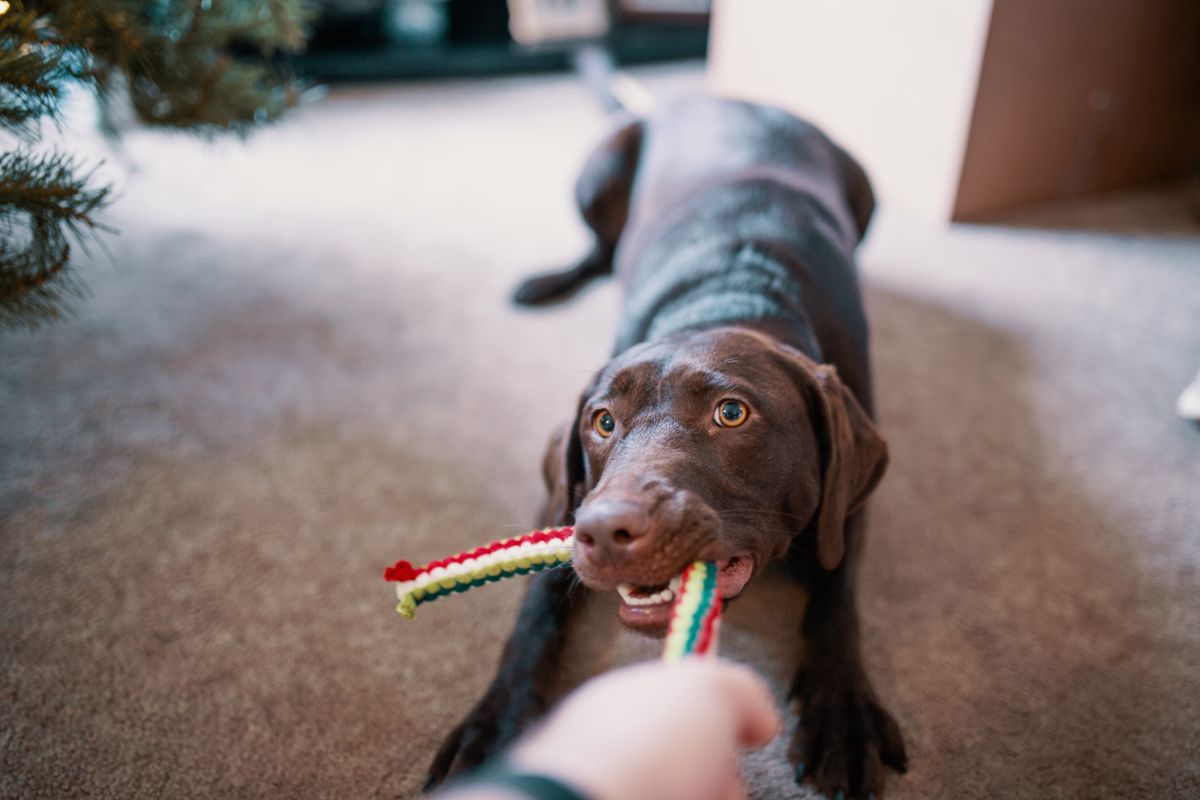
Toy play works best when the human responds to the dog rather than running through a fixed performance. Some dogs enjoy a gentle tug game. Others prefer carrying a soft toy around while you walk beside them. Keep a tug toy low enough for a comfortable body position and avoid jerking, swinging, or lifting the dog. Let go if the dog becomes uncomfortable, and use a familiar exchange routine to finish.
Do not turn every toy into a high-speed throw. In a small room, rolling a suitable toy a short distance may be easier on the environment than bouncing a ball toward a cabinet. A dog who repeatedly slips, collides with furniture, or cannot pause needs a calmer activity and a different setup. Put the toy away before it breaks or the dog's movements become frantic. A minute of shared play can be a complete activity; it does not need to fill the whole afternoon.
Use everyday skills as a change of pace
A few familiar skills can provide a quiet bridge between play and rest. Practice touching a hand target, looking toward you after hearing a name, or walking a couple of steps to a comfortable mat. Pick skills your dog already understands. A rainy afternoon is not the best moment to demand a difficult new behavior while the household is busy. Reward a small success, then release the dog to choose another activity.
Vary your own position gently. You might stand near the sofa for one repetition and sit on a chair for the next. Avoid asking for repeated sits or other movements simply to accumulate repetitions. Keep sessions brief and adapt them to the dog's body and attention. If the dog turns away, sniffs elsewhere, or hesitates, consider whether the task is unclear, the reward is unhelpful, or a break is needed. More instructions are rarely the most useful response.
Place rest between activities
Rest belongs in the rotation, not just at the end of a tiring day. After a search or toy game, return the room to its normal state, lower the activity level, and let the dog use a familiar resting place. You can read, work, or make a drink while the dog settles. Constantly presenting a new task whenever the dog looks at you can make an ordinary quiet afternoon feel like a schedule of performances.
A suitable chew or food toy may help some dogs settle, but check the product's safety and supervise according to your dog's habits. Other dogs rest better with no object at all. Keep children and visitors away from the resting dog. If your dog seems unable to settle despite a comfortable environment and appropriate daily care, take notes and discuss the pattern with a veterinary or qualified behavior professional rather than simply increasing the amount of play.
Make the rotation fit your household
Imagine three small windows of activity rather than a timetable filled minute by minute. You might offer an easy search after lunch, a brief shared toy game when you take a work break, and a familiar training exercise before preparing dinner. Put quiet periods between them and keep normal meals and toilet routines predictable. The order can change. The important part is that each activity has a clear beginning and ending.
For a dog who dislikes food searches, replace the search with a calm exploration of a safe, newly arranged corner of the room. For a dog who becomes overexcited around toys, begin with a quieter skill instead. Puppies and older dogs may need different breaks and support. Write down what actually helped rather than what looked impressive online. A simple activity that fits the available space is more likely to become a useful household habit.
Have a quiet backup ready
Some rainy days are also busy household days, and a planned game may not fit. Keep a safe, familiar quiet option available rather than feeling you must recreate a full activity schedule. That might mean a comfortable rest area after an appropriate toilet break, with supervision suited to any item you provide.
Avoid compensating for a missed activity with a much more intense one late at night. Return to the normal routine when you can. The rotation is meant to create manageable choices, not obligations that make the household anxious. If your dog's daily needs are regularly difficult to meet, discuss a sustainable care arrangement with appropriate support instead of relying on emergency entertainment.
Keep the next rainy day easier
Before putting everything away, check the toys and wipe down any food-contact surfaces. Store a small group of suitable play items together so you do not have to search for them next time. Keep damaged objects out of the box. A short note on your phone can record which search was easy enough, which toy stayed calm, and how much space the dog needed to turn comfortably.
Rotate a few familiar objects instead of buying a new collection for every stretch of bad weather. Novelty can come from a different safe location or a slower way of sharing a toy. When outdoor conditions improve, return to appropriate walks and exploration at your dog's pace. The value of an indoor rotation is its flexibility: it gives you something manageable to offer while allowing the dog plenty of freedom to pause, disengage, and rest. A quieter house is a useful result, but a comfortable dog is the more important one.