Begin with your cat’s existing habits
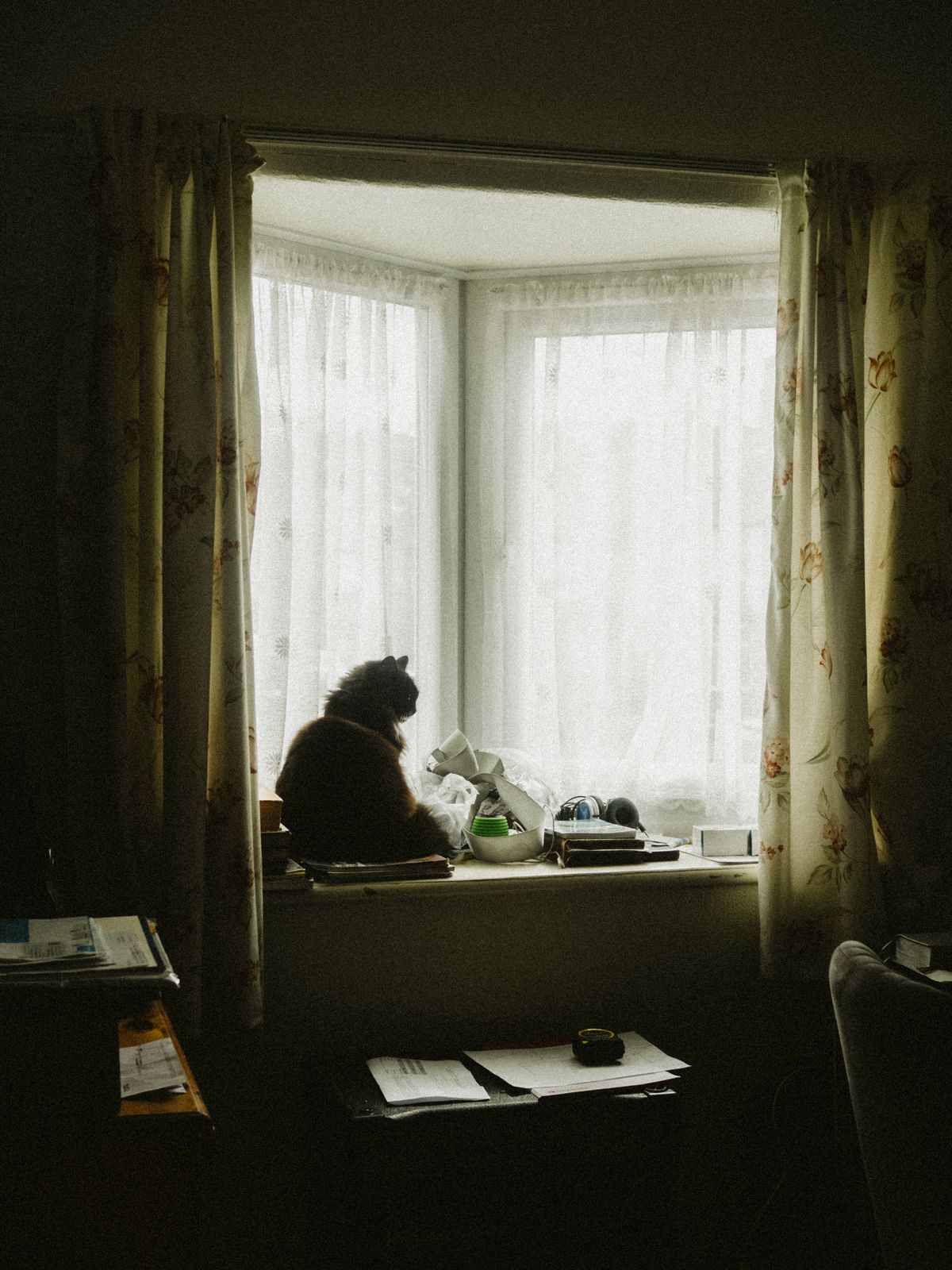
A window can be a small indoor cat's busiest place. Light moves across the floor, a delivery person passes, and leaves flicker beyond the glass. Before buying a shelf or moving a chair, watch how your cat already uses the room. Does the cat climb up to look outside, sit a little way back, or avoid the window when people approach? The most useful perch supports a preference you can actually observe.
Choose a window that offers an interesting view without placing the cat in constant confrontation with passing dogs or outdoor cats. Some cats watch calmly; others become tense or repeatedly rush the glass. A perch is not automatically enriching simply because it faces outdoors. Write down when the cat chooses to visit, how long they stay, and whether they leave in a relaxed way. These observations will guide the location more reliably than a photograph of an attractive room.
Check the window before the furniture
Check frames, catches, screens, and the way the window opens. An insect screen should not be assumed to hold a cat's weight or prevent a fall. Tilted or partially open windows can create trapping hazards. Keep the window securely closed unless you have a purpose-designed, reliably fitted solution that makes access safe. If the property is rented, discuss structural changes with the owner and use a suitable professional when necessary.
Look around the window too. Remove blind cords and loops from reach, and keep curtains from creating an unstable climbing route. Move breakable ornaments and check that nearby plants are safe for cats. Keep heaters, hot pipes, and electrical leads away from the resting surface. A good view is not worth a risky route. Recheck the area whenever cleaning, building work, or seasonal decorations change the arrangement, because a once-clear landing space can easily become crowded.
Offer a stable route up and down
A comfortable perch needs a route, not just a platform. A cat should be able to approach and leave without jumping over clutter or landing on a slippery floor. Consider a sturdy chair, an appropriate cat tree, or a securely installed shelf system. Check the manufacturer's load limit and fitting instructions. Suction-mounted products need careful inspection; dirt, temperature changes, and wear can affect their hold.
Allow for your cat's size and mobility. An older cat or a cat with movement difficulties may need lower steps and veterinary advice about comfortable access. Do not assume that a cat who can jump once can do it comfortably every day. Watch the descent as well as the climb. Hesitation, slipping, or avoiding a previously favored height deserves attention. Arrange a clear alternative exit so the cat does not have to squeeze past another pet or a person sitting directly below.
Choose a resting surface for real use
The platform should be large enough for the cat to change position without hanging over an edge. Check for wobbling, sharp corners, exposed staples, and gaps that could trap a paw. A removable, washable cover makes routine care easier. Choose a surface that stays in place when the cat turns, and avoid loose fabric that slides across a smooth board. There is little benefit in a plush cushion if the entire cushion moves during the landing.
Introduce the perch as part of the room. Let the cat investigate in their own time rather than lifting them onto it repeatedly. You can place a familiar blanket nearby if that suits the setup. Keep food and litter facilities in their appropriate separate locations rather than crowding every resource around the window. A perch works best as one useful choice among several comfortable places, not as the only place the cat can escape household activity.
Watch what happens on the other side
A bird feeder close to a window may appear entertaining, but consider the welfare and safety of both animals. Keep wildlife away from situations where cats can reach them and avoid creating repeated close confrontations. Follow local wildlife guidance when choosing feeder locations and address collision risks appropriately. You do not need to install a feeder at all; a view of moving leaves, changing light, and ordinary street activity can be interesting enough.
If an outdoor cat repeatedly visits the glass, notice your cat's response. Pacing, fixed staring, vocalizing, or redirected conflict with another household pet may mean the view is too intense. A partial opaque film or a different perch can provide relief while preserving some daylight. Avoid spraying or frightening visiting animals. Focus on changing access and visibility in a humane way. Persistent distress or household aggression calls for qualified veterinary and behavior support.
Keep temperature and light comfortable
Sunlight changes across the day and through the year. A spot that feels pleasant in the morning can become hot later. Check the actual temperature where the cat rests and provide shaded alternatives and fresh water elsewhere. Do not leave a cat confined to a sunroom or other space where heat can build up. Screens and open doors are not a substitute for thinking about the room's conditions.
Cold glass and drafts can also change whether the perch is inviting. A cat who stops using it may simply be choosing a warmer place, although sudden changes in normal behavior should be considered alongside the cat's overall health. Let the cat move freely between resting areas. Avoid putting scented sprays, essential oils, or strong cleaning products on the perch. Use appropriate cleaning methods and allow surfaces to dry before the cat returns, following any product safety instructions.
Prevent the perch from becoming a bottleneck
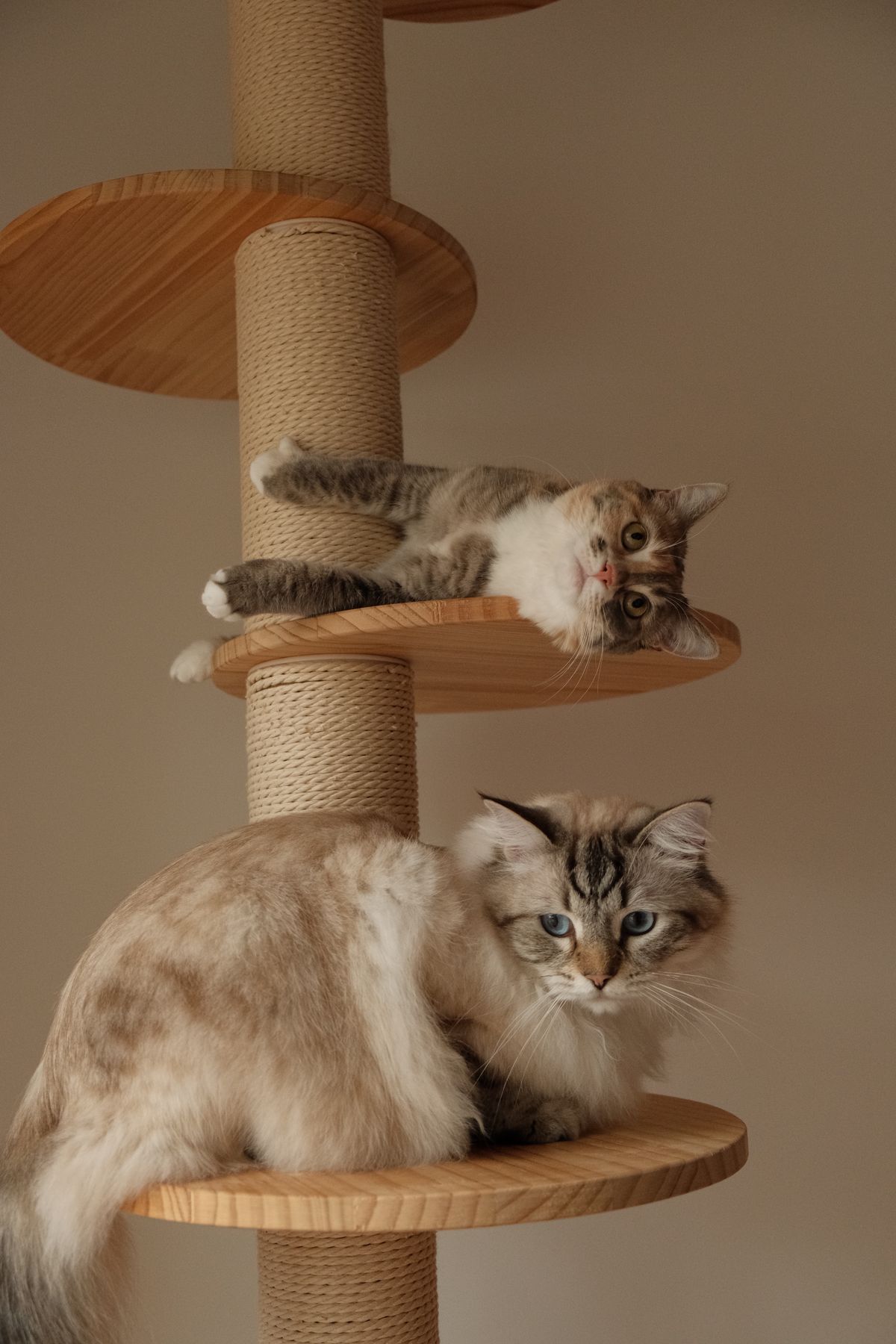
In a home with several cats, the best view can become a guarded resource. One cat may sit on the access step while another waits below, creating tension that looks like ordinary lounging. Offer more than one comfortable elevated place and keep routes open. The alternatives do not need to be identical, but each cat should have options that are easy to reach without passing directly beside another cat.
Watch quiet details: one cat leaving as another enters, taking a long detour, or visiting only at night. These patterns may reveal competition even without hissing. Do not place the only water bowl, sleeping place, and favorite view in the same narrow corner. Spread useful resources through the home where possible. If cats are already in conflict, furniture changes may help management, but introductions and behavior plans need an individual approach. Do not force cats onto a shared perch to encourage friendship.
Observe at more than one time
Check the planned location in the morning, afternoon, and evening before settling on it. You may find that a curtain moves across the access route later in the day or that a neighboring dog passes the window at the same busy hour. A quick inspection at one quiet moment can miss those ordinary changes.
Also look from the floor toward the platform. A convenient shelf at human eye level may have an awkward approach from the cat's height. Remove clutter and check where the cat can land if it decides to leave quickly. Thinking about the entire route helps turn an attractive spot into a genuinely usable part of the room.
Use a small maintenance routine
Make the perch part of your normal room check. Test stability, examine fastenings, wash the cover when needed, and clear the landing area. Follow the product's maintenance instructions and replace damaged parts promptly. Check beneath cushions and around mounting points where wear can be hidden. Any movement that was not there before deserves investigation before the cat uses the perch again.
Review whether the arrangement is still useful after a week or two. A perch your cat ignores may need a quieter location or an easier route, rather than another expensive accessory. A cat who uses it briefly and then sleeps elsewhere may be using it exactly as intended. The aim is not to keep the cat at the window for a certain amount of time. It is to provide a safe, comfortable place to look out, then an equally comfortable choice to turn away and rest.