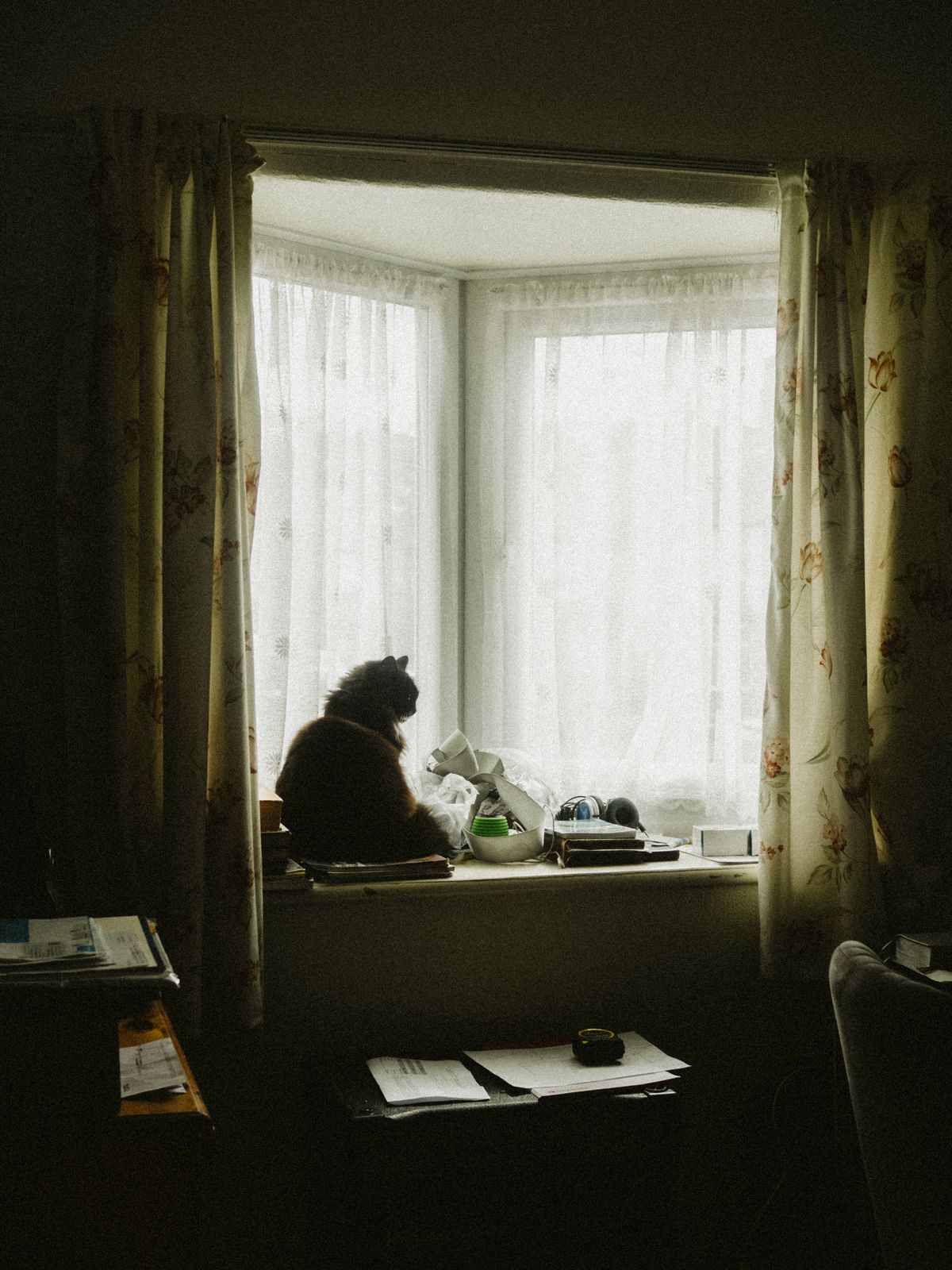
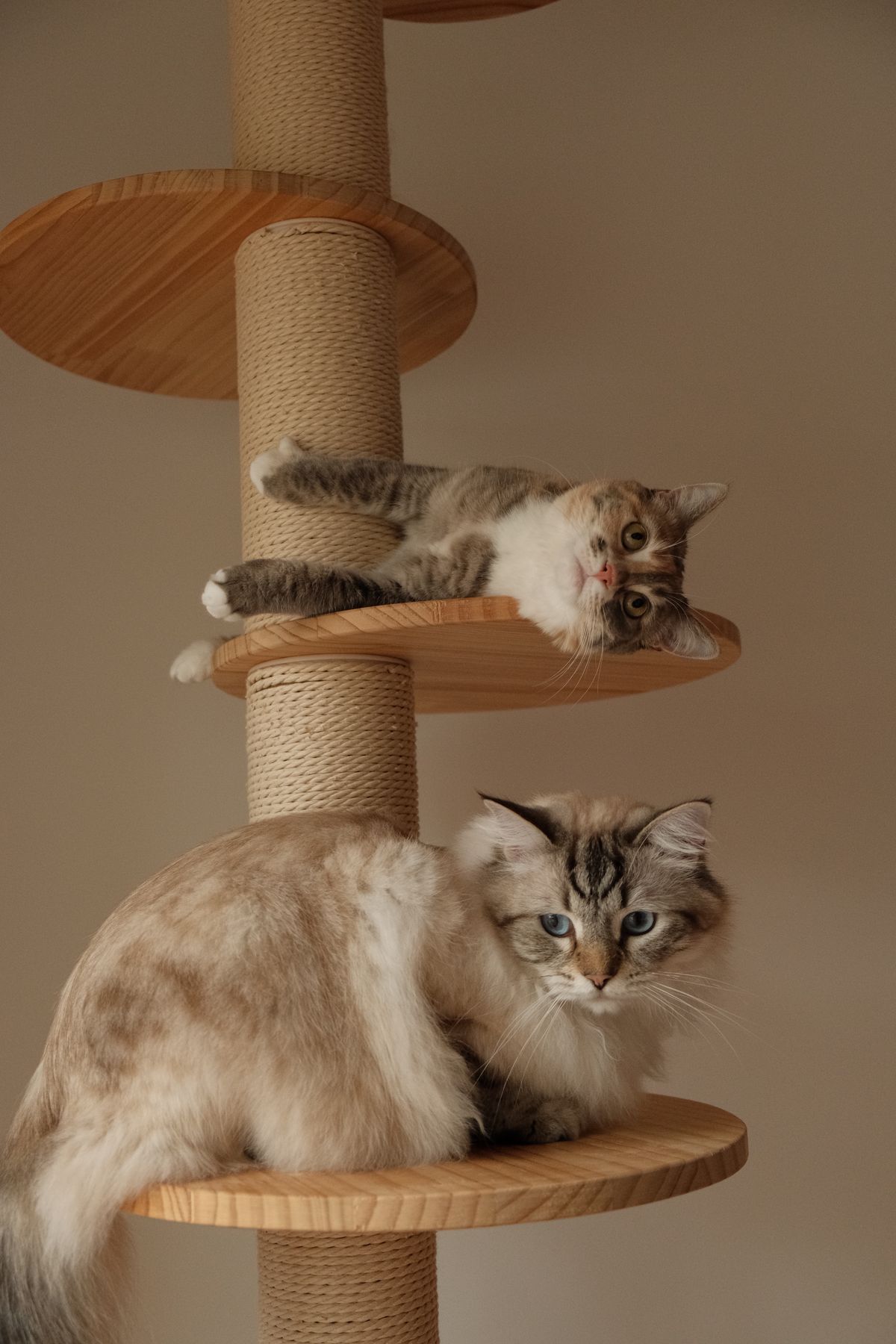
Look beyond whether the cats fight
Two cats can share a room without being equally comfortable in it. One may sleep in the best chair while the other waits near the door. One may pass through the room freely while the other travels only when the first is asleep. A lack of noisy conflict is useful, but it is not the whole picture. Watch how each cat uses the space over several ordinary days.
Draw a rough room plan and mark doors, windows, resting places, water, food stations, and routes to litter facilities. Then note where each cat pauses, turns back, or changes height. You are looking for practical obstacles and choices, not deciding which cat is the boss. A layout that supports separate paths and several comfortable resting places can reduce pressure, although established conflict may also need an individual veterinary and behavior plan.
Find the narrow places
Doorways, the gap beside a sofa, and the bottom of a cat tree can become bottlenecks. A cat resting there may control access without moving. Notice whether another cat waits, detours, or hurries past. A wide room can still have only one workable route if furniture forms a narrow channel. Moving a small table may be more helpful than adding another bed in the same blocked corner.
Keep escape routes practical. A shelf that ends above a closed cabinet offers height but may leave the cat with only one way down. Aim for more than one safe route where possible, using stable furniture or correctly installed cat furniture. Check for gaps, slippery surfaces, and items that can fall. Do not create ambitious jumping routes for a cat whose mobility is limited. Comfortable access matters more than the number of levels in the room.
Spread valuable resources apart
Several bowls placed side by side are still one crowded feeding location. Likewise, two beds touching on a single shelf may not offer meaningful choice. Place useful resources far enough apart that one cat does not have to pass directly beside another to reach them. Consider sightlines as well as distance. A corner or a piece of furniture can sometimes give a resting cat useful visual separation.
Food, water, litter facilities, scratching surfaces, and resting places serve different purposes and should not all be concentrated in one station for human convenience. Check the wider home rather than the room in isolation. A cat may leave a comfortable bed to find that the only route to a litter tray is blocked. Follow suitable feline welfare guidance about resource provision and adapt it to your household. If the home is small, even modest separation and additional routes may improve the choices available.
Offer more than one kind of height
Cats differ in their preferences. One may favor a high shelf while another chooses a low chair with a view of the doorway. Provide options rather than assuming the highest platform is the best one. Sturdy cat trees, safe shelves, and existing furniture can all contribute if they are stable, suitable for the cat's weight, and accessible. Follow installation and maintenance instructions rather than relying on appearance alone.
A cat resting high above the room should be able to leave without landing beside another cat. Check whether the route crosses a food station or a favorite bed. Offer lower alternatives for cats who are older, less mobile, or simply less interested in climbing. Sudden changes in willingness to jump or use a resting place deserve veterinary attention. Do not interpret every change as a social dispute; discomfort can alter how a cat uses familiar spaces.
Protect quiet rest
Resting spaces should be away from repeated disturbance. A bed beside a speaker, a washing machine, or a busy children's play area may be less useful than it looks. Give each cat places where people will not reach in, lift them, or invite another cat to join them. Explain to children that a resting cat is allowed to remain undisturbed. Hiding places need safe access and should not become traps during household activity.
Keep the environment predictable when you change it. Moving every resource at once may make the room harder to understand. Add or adjust one part, then observe. Leave familiar comfortable places available where possible. If a cat stops eating normally, hides much more than usual, or changes toileting habits, contact the veterinary team. Furniture planning is helpful management, but those changes should not be treated as a decorating problem alone.
Manage play and food with care
Shared play and meals can reveal pressure that quiet resting does not. A confident cat may intercept a toy repeatedly or approach another cat's bowl. Separate sessions and meal locations can give the quieter cat a better opportunity. Avoid using a single toy to draw cats into close contact if they are not comfortable with one another. Feed in places where each cat can eat without being watched or displaced.
Do not force proximity to encourage bonding. Placing cats together on a tree, shutting them in the room, or holding them near each other removes useful choices. If introductions are incomplete or conflict has developed, seek a gradual, individual plan from a qualified professional. In the meantime, secure separation with appropriate resources may be needed. Safety includes the people in the home: do not put your hands between fighting cats or attempt to grab an intensely aroused cat.
Watch each cat’s daily map
After making a small change, observe each cat separately. Does the quieter cat use the water station while the other is awake? Can both reach favored resting places without rushing? Are doorways less frequently occupied? Note these concrete changes instead of waiting for the cats to sleep together. Many cats live comfortably with some distance, and that can be a reasonable household outcome.
Use a few observations at consistent times, such as before a meal and during an evening quiet period. Avoid standing over the cats to collect data. Ordinary household observation is enough. Ask other caregivers what they notice, especially if they use the room at different times. A route that seems clear at noon may be blocked by school bags in the evening. The room's usefulness depends on how it is actually lived in, not just how it looks when tidy.
Check the room during household traffic
Stand back during an ordinary busy period and notice how people change the routes. A chair pulled out for dinner, an open cupboard, or a school bag on the floor can remove a path that looked clear earlier. Ask the household to keep one or two important routes consistently available rather than expecting the cats to navigate around every temporary obstacle.
If furniture must move, check access to water, litter facilities, and resting areas afterward. A room does not stay exactly as it appeared on the sketch. The useful plan is one that survives normal living, with enough alternative routes that a small change does not leave one cat waiting at the edge of the room.
Keep the room adaptable
A shared room will need adjustment as cats age, furniture changes, and household routines shift. Check the stability of climbing furniture, wash covers when appropriate, and repair damaged scratching surfaces before they become unsafe. Keep access routes clear during cleaning and gatherings. If you temporarily move a resource, make sure each cat can find an accessible alternative.
The most helpful plan is often modest: two routes around a chair, another resting place away from the doorway, or a water bowl in a separate quiet location. These changes are easier to evaluate than a complete room makeover. Continue to consider health, individual preferences, and the relationship between the cats. A good shared room does not require constant closeness. It lets each cat move, eat, scratch, look out, and rest without repeatedly negotiating access to the same small piece of space.