Think about the end before the beginning
A wand toy appears simple: move it and the cat chases. Yet the difference between a satisfying session and a frantic one often lies in the details. A toy that never slows down, never passes behind anything, and never becomes catchable can be difficult for a cat to engage with comfortably. Begin with a small aim: offer a few chances to watch, approach, chase, and catch, then end in a quiet way.
Your cat may prefer a short session or spend much of it watching. That does not automatically mean the toy has failed. Cats differ in age, movement, experience, and interest. Observe what your individual cat chooses. If movement seems painful, breathing changes unusually, or the cat suddenly avoids normal play, contact the veterinary team. Play should fit the cat's body and current comfort, rather than push them toward a target set by a clock.
Prepare a clear, nonslip play space
Remove fragile objects, exposed cords, small items that could be swallowed, and anything that can fall when bumped. Close access to unsafe heights. Check the floor where the cat will turn and land; a small rug is useful only if it stays flat and does not slide. Keep the toy away from hot cooking surfaces, balconies, open windows, and gaps where a paw could become trapped.
Inspect the wand and attachment before starting. Loose feathers, bells, strings, and damaged joins can become hazards. Use a toy appropriate for your cat and supervise the entire session. Do not leave string-like toys available when you are not there, even if your cat usually ignores them. Keep your hands and feet out of the game. A moving sleeve under a blanket may seem convenient, but it can make ordinary human movement part of the hunting target later.
Let the toy behave like something worth watching
Move the toy across the floor and pause. Let it disappear briefly behind a stable, safe object, then reappear at a reachable distance. Try a small movement followed by stillness rather than constant fast circles. Give the cat time to look and decide. Some cats are interested in a low skittering movement; others prefer a toy that briefly rises and settles. Keep the movements close enough to the ground to avoid encouraging awkward leaps.
Watch where the cat's attention goes. If the toy moves directly toward the cat's face, the cat may lean away rather than chase. Try moving it away and across the field of view. Avoid dragging the toy into the cat's resting place or cornering them with it. The cat should be able to leave. An invitation to play works better when it remains an invitation throughout the session.
Make catching part of the pattern
Allow regular catches. When the cat reaches the toy, soften your hold and let the movement stop for a moment. Do not yank the attachment from their mouth or pull hard against claws. If you need to retrieve it, wait for a release or use a calm exchange with another suitable object. Keep the wand line from wrapping around the cat's body, legs, or furniture while you do this.
The session does not need to become a contest between your speed and the cat's persistence. A few catchable movements can be more engaging than a long chase with no result. Pay attention to the cat's mouth and chewing habits: some attachments should be removed promptly if the cat begins trying to eat them. If a piece may have been swallowed, seek veterinary advice rather than assuming it will pass. Safety matters more than completing a planned play sequence.
Use pauses to read the cat
Pause between small bursts of movement. The cat may remain crouched and watching, move to a new position, groom briefly, or walk away. Look at the whole body and the context. Flattened ears, tense movements, repeated tail lashing, or avoidance can mean the session should change or end. There is no need to keep waving the toy until the cat reacts. A quieter movement or a complete break may be more suitable.
Some cats become intensely aroused by fast activity. If your cat starts redirecting onto your arms or another pet, stop safely, increase space, and rethink the setup. Do not punish the cat for reacting to a game you helped create. Avoid reaching in to grab them. Plan shorter, calmer sessions and seek qualified support if the pattern continues. Comfortable play allows the cat to switch attention and recover, not just remain highly activated.
Give each cat a fair opportunity
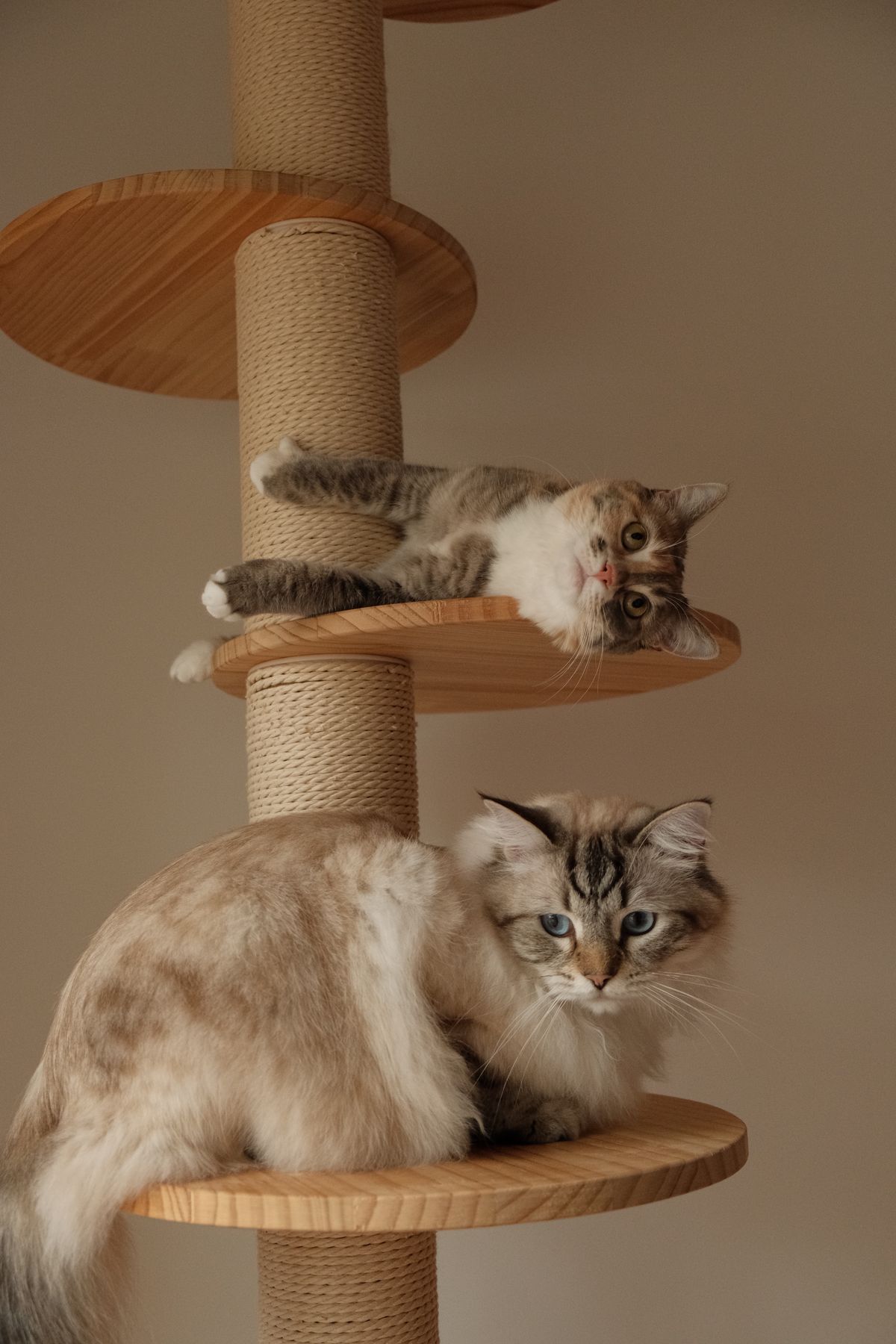
With several cats, one confident player can take over while the quieter cat watches from a distance. Separate short sessions may be the easiest solution. Choose a room where each cat can play without being ambushed at the doorway afterward. Ensure the other cat has comfortable resources elsewhere rather than shutting them in a bare space. Observe how they behave before and after the session.
If you play with two cats together, provide enough space and avoid drawing the toy between them in a way that creates a collision. Do not expect both to share a single catch comfortably. Competition over a toy may look exciting on video while being unpleasant for one cat. You can also vary the time of day so a quieter cat gets an opportunity when the home is settled. Each cat's interest deserves attention without turning the activity into a comparison.
Create a quiet finish
Slow the toy near the end and allow another easy catch. Put it away securely once the cat has disengaged. If a small food reward suits your cat, you can offer a suitable amount from the normal daily ration afterward, but it is not necessary to add a large snack to every session. Make fresh water and a comfortable resting place available. Avoid immediately replacing the wand with another intense activity because the first game went well.
Keep the ending predictable without making it rigid. A familiar phrase, the toy going into a cupboard, and your return to a calm household task can signal that play has finished. If your cat follows the cupboard, wait and observe rather than reopening it automatically. The aim is to help play fit into ordinary life. A session can end with the cat resting nearby, exploring the room, or choosing a different quiet activity.
Keep the equipment count small
You do not need a large toy collection to learn what your cat enjoys. Begin with one safe attachment and change the movement before buying another. A toy that was ignored when waved overhead may become interesting when moved slowly along a clear floor. Record that difference without assuming every new preference requires a purchase.
Keep the wand and its spare parts together in a secure cupboard after play. Check that visiting children understand why string-like toys are not left out. A simple storage routine protects the next session as well as the current one, because you can inspect the same intact equipment instead of searching for a missing attachment while the cat waits.
Keep a small record of preferences
Note which movement attracted attention, which toy stayed intact, and how the cat behaved afterward. You may find that morning play works better than late evening, or that a simple fabric attachment is preferred to a noisy one. Rotate a few safe toys instead of leaving every option on the floor. Clean and maintain them according to the manufacturer's guidance, and remove damaged attachments.
Over time, your record should make sessions simpler. You will recognize the pause before a pounce, the moment a cat wants another catch, and the point at which watching has become enough. Do not judge success by the height of a jump or the speed of a chase. A good session gives the cat choices, safe movement, and an ending they can settle after. That is a more useful standard than trying to keep every cat playing for the same number of minutes.